Saturday, October 10, 2026

Review: How Not to Be Wrong: The Power of Mathematical Thinking

How Not to Be Wrong: The Power of Mathematical Thinking How Not to Be Wrong: The Power of Mathematical Thinking by Jordan Ellenberg
My rating: 4 of 5 stars

Lots of great examples and approaches to clear, orderly, accurate thinking.

View all my reviews

Review: The Assyrian Empire

The Assyrian Empire The Assyrian Empire by History Nerds
My rating: 3 of 5 stars

The history of the ancient world empire told simply and some reason earnestly as model for moderns to reflect on.

View all my reviews

Review: A Most Remarkable Creature: The Hidden Life and Epic Journey of the World’s Smartest Birds of Prey

A Most Remarkable Creature: The Hidden Life and Epic Journey of the World’s Smartest Birds of Prey A Most Remarkable Creature: The Hidden Life and Epic Journey of the World’s Smartest Birds of Prey by Jonathan Meiburg
My rating: 4 of 5 stars

Caracaras, which intrigued Darwin (he wrote about them at length) in the Falkland Islands. Also at home in remote Tierra del Fuego and the tropical forests of Guyana, the now rare and inquisitive striated caracaras are center to this history which includes the life and work of William Henry Hudson, a Victorian writer and naturalist who championed caracaras as an unsung wonder of the natural world.

View all my reviews

Review: Say It Plain: A Century of Great African American Speeches

Say It Plain: A Century of Great African American Speeches Say It Plain: A Century of Great African American Speeches by Catherine Ellis
My rating: 3 of 5 stars

Say It Plain samples African-American oratory from an antique recording of Booker T. Washington and others from Marcus Garvey, Shirley Chisholm, and MLK. Host Michele Norris presents the 2005 event from American Public Media. I actually took in an Audible audiobook edition that used to be at this link. Some audio and more can is here from PRX.

View all my reviews

Review: Hannibal: Rome’s Greatest Enemy

Hannibal: Rome’s Greatest Enemy Hannibal: Rome’s Greatest Enemy by Philip Freeman
My rating: 3 of 5 stars

This is a brisk, entertaining read of Hannibal's long struggle against Rome. Of course, bringing the elephants over the Alps is an exciting chapter here. I was looking forward to reading that. I was also impressed with the multi-day march along the swollen Arno. This area was mostly marshland and happened to be overflowing more than usual that spring. Hannibal knew that this route was full of difficulties, but it remained the surest and quickest way to central Italy. Polybius claims that Hannibal's men marched for four days and three nights "through a land that was under water", suffering terribly from fatigue and enforced want of sleep. He crossed without opposition over both the Apennines (during which he lost his right eye because of conjunctivitis) and the seemingly impassable Arno to lure the main Roman army under Flaminius into a pitched Battle of Lake Trasimene.

View all my reviews

Review: Meister Eckhart's Book of Secrets: Meditations on Letting Go and Finding True Freedom

Meister Eckhart's Book of Secrets: Meditations on Letting Go and Finding True Freedom Meister Eckhart's Book of Secrets: Meditations on Letting Go and Finding True Freedom by Jon M. Sweeney
My rating: 3 of 5 stars

Poetic Christian mysticism. I was surprised Eckhart suggests at predestination.

View all my reviews

Wednesday, October 7, 2026

Review: Pudd'nhead Wilson

Pudd'nhead Wilson Pudd'nhead Wilson by Mark Twain
My rating: 4 of 5 stars

Introduced by Langston Hughes. I read the third printing, Jan. 1984, with different cover.

As I get older, somehow flicks with subtitles and dialect like Twain's characters speak irk me. Still, I have read this crime drama setting with joy. It is a witty indictment of racism, classism and other superficial judgements and xenophobia. Specifically, it exposes as ridiculous the blood laws and slavery institution of Twain's time.

Sort of a crime noir and bit of courtroom drama, of all the setting I think I like most the idea of a group of guys getting together regular to share ideas as a bunch of freethinkers.

View all my reviews

Review: Ghost: Confessions of a Counterterrorism Agent

Ghost: Confessions of a Counterterrorism Agent Ghost: Confessions of a Counterterrorism Agent by Fred Burton
My rating: 4 of 5 stars

Burton began his career in law enforcement as a police officer in Montgomery County, Maryland and later worked for the U.S. Secret Service. From 1985 to 1999, years of focus here, he was a special agent with the U.S. Diplomatic Security Service (DSS). He eventually became the deputy chief of the DSS counterterrorism division.

While with the DSS, Burton recalls here Terry Waite and Iran-Contra unfolding early in his SS career. (Terry Waite, the Archbishop of Canterbury's special humanitarian envoy, was kidnapped and held captive for nearly five years in Beirut because his humanitarian hostage-negotiation missions were covertly and disastrously entangled with the secret Iran-Contra arms-for-hostages dealings orchestrated by U.S. National Security aide Oliver North.) He also recounts working in Pakistan on the mangos and nerve gas killing of Ziaulhaq as part of the 1988 Pakistan Air Force C-130B crash. He was involved in the arrest of Ramzi Yousef, the mastermind of the first World Trade Center bombing in 1993 which closes out this memoir.

In the epilogue Burton joins Stratfor, an Austin, Texas-based geopolitical forecasting and analysis company, in 2004.

View all my reviews

Saturday, October 3, 2026

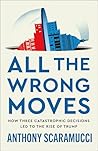
Review: All the Wrong Moves: How Three Catastrophic Decisions Led to the Rise of Trump

All the Wrong Moves: How Three Catastrophic Decisions Led to the Rise of Trump All the Wrong Moves: How Three Catastrophic Decisions Led to the Rise of Trump by Anthony Scaramucci
My rating: 4 of 5 stars

Looking back on buying into the Trump idea, Scaramucci finds three pivotal trends pre-Trump that made his rise possible:
1. Privileging China. Clinton supports the WTO in giving China special privileges in trade, hurting American workers deeply, quickly, and permanently.

2. Waging War Without Taxes. George W. Bush invades Iraq while simultaneously cutting taxes, thereby shifting the cost of a misguided, multitrillion-dollar effort to alter the entire Middle East to ordinary Americans, while removing any buffer between them and ruination.

3. Bailing Out Wall Street. Obama bails out banks and Wall Street, which were failing largely thanks to Clinton's and Bush's finance policies, while ordinary Americans by the millions lose homes and livelihoods.


At least a couple of times her refers to a historical "Crackup" without explanation:
...a celebration of the fiftieth anniversary of the IMF and the World Bank was loudly interrupted by protests. By June 1999, the movement's organizational power had grown. That month, cities around the world took part in the Carnival Against Capital, and in the Eugene, Oregon, event that day, anarchists clashed with police, with temporary success, pushing them out of a park.

Which I take to be the mixture of anarchism and radical environmentalism, punk rock and old-hippiedom opening the door to populism. He uses the term to describe the social upheavals of the late 1960s and early 1970s, a period when the established order began to break down:
• The Fragmenting of Consensus: The sudden shattering of traditional social norms, trust in institutions, and postwar political stability.
• The Countercultural Wave: The explosion of radical anti-establishment politics, hippie communes, anti-war protests, and psychedelic culture that shook America.
• The Political Realignment: Events like the televised clashes between police and anti-war protesters at the 1968 Chicago Democratic National Convention. Andersen identifies these as early milestones of a "crackup" that permanently fractured the American left and gave rise to a fierce conservative cultural backlash.

By linking the 1999 anti-globalization protests back to "the Crackup that began in the '60s," the author is arguing that the Carnival Against Capital, for example, wasn't entirely a modern phenomenon. Instead, its mix of radical anarchy and alternative lifestyle was a direct echo of that original 1960s cultural collapse.

I don't know if I am entirely convinced of this three root cause. I do believe a manifold of historical events gave the U.S. an authoritarian president and subservient other branches of government. I am more behind his prescriptive cures:

1. Stronger rules against monopoly.
2. Taxation overhaul.
3. Tariff correctives.
4. Election funding reform.
5. Fight partisan gerrymandering.
6. Strengthen investigations to be outside of executive branch control

A small nitpick: I loath the Garamond font used here and popularly. I especially don't like that capital "I" and numeral 1 have the same symbol.


View all my reviews

Review: Opera

Opera Opera by Edward Joseph Dent
My rating: 3 of 5 stars

Kinda chronological, but more chronological within region. So, Italy first, England and America last... Key composers, format, and technical (effects) development with quirk illustrations and synopses of many of the operas

View all my reviews

Thursday, October 1, 2026

Review: Bella Bella

Bella Bella Bella Bella by Harvey Fierstein
My rating: 4 of 5 stars

Wonderful one-man show bringing to life Bella Abzug, first NY female senator and a firebrand w/long, impactful political career without compromise.

View all my reviews

Review: Empire Down: A Historical Look at the Largest Civilizations in History and What Caused Them to Fail

Empire Down: A Historical Look at the Largest Civilizations in History and What Caused Them to Fail Empire Down: A Historical Look at the Largest Civilizations in History and What Caused Them to Fail by Barrett Williams
My rating: 2 of 5 stars

Adequate Virtual Voice narration and shallow content make this a hard pass. It reads like eight grader school assignments,. You'd be better off with he Wikipedia articles. No Macedonian or Greek empires. Han and Gupta empires are nice additions, but nothing from Africa without a pharaoh and nothing from indigenous North America. What order is this in? Ottoman chapters after Byzantine with British empire betwixt....

View all my reviews

Review: Sinatra and the Jack Pack: The Extraordinary Friendship between Frank Sinatra and John F. Kennedy?Why They Bonded and What Went Wrong

Sinatra and the Jack Pack: The Extraordinary Friendship between Frank Sinatra and John F. Kennedy?Why They Bonded and What Went Wrong Sinatra and the Jack Pack: The Extraordinary Friendship between Frank Sinatra and John F. Kennedy?Why They Bonded and What Went Wrong by Michael Sheridan
My rating: 3 of 5 stars

The book goes deep on the Sinatra-Kennedy connection and uncovers a lot of Sinatra-Mob connections. But still, Sirhan Sirhan was the RFK shooter and the Kennedy patriarch is not proven to have been into rumrunning. Some may disagree.

View all my reviews

Review: All the Wrong Moves: How Three Catastrophic Decisions Led to the Rise of Trump

All the Wrong Moves: How Three Catastrophic Decisions Led to the Rise of Trump All the Wrong Moves: How Three Catastrophic Decisions Led to the Rise of Trump by Anthony Scaramucci
My rating: 0 of 5 stars

1. Privileging China. Clinton supports the WTO in giving China special privileges in trade, hurting American workers deeply, quickly, and permanently.

2. Waging War Without Taxes. George W. Bush invades Iraq while simultaneously cutting taxes, thereby shifting the cost of a misguided, multitrillion-dollar effort to alter the entire Middle East to ordinary Americans, while removing any buffer between them and ruination.

3. Bailing Out Wall Street. Obama bails out banks and Wall Street, which were failing largely thanks to Clinton's and Bush's finance policies, while ordinary Americans by the millions lose homes and livelihoods.


Crackup?
...a celebration of the fiftieth anniversary of the IMF and the World Bank was loudly interrupted by protests. By June 1999, the movement's organizational power had grown. That month, cities around the world took part in the Carnival Against Capital, and in the Eugene, Oregon, event that day, anarchists clashed with police, with temporary success, pushing them out of a park.

This mixture of anarchism and radical environmentalism, punk rock and old-hippiedom, gave the movement a countercultural revolutionary feeling-hearkening back to the Crackup that began in the '60s. It could also look, at the time, more European than American.

To outsiders, anyway. Definitely to me. As I've said, at the time I didn't get it. The protesters seemed kooky to me-and economically uninformed. But the historical fact is that, in the US, something new was happening.

Andersen uses the term to describe the social upheavals of the late 1960s and early 1970s, a period when the established order began to break down. The reference specifically captures:
• The Fragmenting of Consensus: The sudden shattering of traditional social norms, trust in institutions, and postwar political stability.
• The Countercultural Wave: The explosion of radical anti-establishment politics, hippie communes, anti-war protests, and psychedelic culture that shook America.
• The Political Realignment: Events like the televised clashes between police and anti-war protesters at the 1968 Chicago Democratic National Convention. Andersen identifies these as early milestones of a "crackup" that permanently fractured the American left and gave rise to a fierce conservative cultural backlash.
By linking the 1999 anti-globalization protests back to "the Crackup that began in the '60s," the author is arguing that the Carnival Against Capital wasn't entirely a modern phenomenon. Instead, its mix of radical anarchy and alternative lifestyle was a direct echo of that original 1960s cultural collapse.

View all my reviews

Tuesday, September 29, 2026

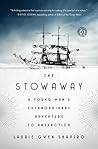
Review: The Stowaway: A Young Man's Extraordinary Adventure to Antarctica

The Stowaway: A Young Man's Extraordinary Adventure to Antarctica The Stowaway: A Young Man's Extraordinary Adventure to Antarctica by Laurie Gwen Shapiro
My rating: 3 of 5 stars

Pretty interesting life from an era when explorers like Byrd were rockstars and stowaways were a thing. The subject himself did the stowaway thing three (or four?) times to reach Byrd and was a subset of something like eight such cases just for Byrd's ventures.

Billy succeeded and became legit and played a real role:
Billy helped construct: Little America's administrative headquarters and the mess hall, which was not large enough for the men to eat in all at once. There would be shifts. It wasn't long before the shacks were covered with snow, with only the stovepipes peeking out. Long tunnels hollowed out of ice were lined with food and instruments and kennels, and connected the two implausibly located buildings built two hundred yards apart. Once completed, it would be unnecessary to go outside. The men chosen to winter over would live like moles under the snow in houses built from highly insulating ceiba tree pods that had traveled from America.


Even back then, they had to deal with flat earthers:
Imagine the laughter in the New York Times editorial room the very next day when they decided to publish an angry letter from multimillionaire Wilbur Glenn Voliva, an evangelist priest and radio broadcaster, and a forceful proponent of the flat-earth theory. Voliva-based in Zion, Illinois...


View all my reviews

Sunday, September 27, 2026

Review: Lies My Teacher Told Me: Everything Your American History Textbook Got Wrong

Lies My Teacher Told Me: Everything Your American History Textbook Got Wrong Lies My Teacher Told Me: Everything Your American History Textbook Got Wrong by James W. Loewen

My rating: 4 of 5 stars

As President, Donald Trump signed an executive order titled Ending Radical Indoctrination in K–12 Schooling on January 29, 2025, aimed at reshaping how history, race, and social issues are taught in American public schools. Key objectives of the executive order include:
• Promote “Patriotic Education”: The order directs federal resources and strategies toward fostering a traditional, pride-focused understanding of American history and founding principles.
• Restrict Curriculum Topics: It targets instruction that suggests the United States is "fundamentally racist, sexist, or otherwise discriminatory," seeking to curtail concepts like white privilege, unconscious bias, and gender identity frameworks.
The 2025 action builds upon similar efforts from Trump's first term, notably the creation of the 1776 Commission in late 2020, which was designed as a pushback against the 1619 Project and critical race theory. Proponents argue the order combats left-wing bias and restores a unifying sense of national heritage and pride. Conversely, educators' unions like the National Education Association (NEA) and historical organizations such as the American Historical Association (AHA) have strongly criticized the order as an act of federal censorship that punishes teachers for presenting an inclusive and honest account of American history.
• The AHA-OAH Statement on the historical community's response.
• New York Times coverage detailing the signing of the January 2025 orders.
• The NEA Press Release for the educators' perspective on the mandate. (NEA President: “Trump’s latest punitive executive order silences and punishes educators for teaching the truth… The Trump administration has issued an executive order that aims to … Restrict educators' ability to teach an honest and accurate...”)
Having been first published in 1995, this book predates Trump’s actions while fighting for high school history education to go further in the direction Trump dislikes. Hiding genocide, racism, and a fear of socialism are exposed in the author’s review of multiple history textbooks. (For burying socialism, it is an interesting angle that Helen Keller’s life as a radical socialist is one thing ignored. Read her writing for yourself.) Also considered is the way such textbooks are composed and updated to fit state boards, especially that of Texas. Maybe at times the author “doth protest too much”. In mentioning the Saigon execution the victim is only a “scared man”. I recall there being at least supposition or even evidence of some crime, although what could justify extrajudicial execution in front of news cameras? It is actually just issues the author wants to see discussed in classrooms. Also, putting a warts-and-all requirement on fantasy fiction machine Disney for their American history display seems a bit much.


View all my reviews

Saturday, September 26, 2026

Review: Great Cases in Psychoanalysis

Great Cases in Psychoanalysis Great Cases in Psychoanalysis by Harold Greenwald
My rating: 3 of 5 stars

It is interesting to be a fly on the wall during the the revealing and vulnerable moments of people in severe need of psychiatry: bulimia, sexuality, insomnia, etc. The focus is on Freud's theories and Freudian approaches and a lot about Oedipus, anal stage, and dream interpretation makes up the first half. Working also as an overview of the development of the craft (each case includes a short bio of the analyst and their contributions to the field) the second half has anti-Freudian and post-Freudian workers as well as other approaches such as group therapy, etc. Jung, Adler, and other key names are included.

View all my reviews

Friday, September 25, 2026

Review: What Could Go Wrong?

What Could Go Wrong? What Could Go Wrong? by Scott Z. Burns
My rating: 4 of 5 stars

This is a compilation of podcast episodes tracking the journey of developing an outline for a sequel to the author's Contagion movie. Burns engages a constellation of AI chatbots with naturalistic voices and backgrounds for writing and standing in as agent and CEOs. Actors and scorer from the original movie are brought in to critique and enliven the process. Overall it is a fascinating model case of AI involvement in creative work.

View all my reviews

Thursday, September 24, 2026

Review: Lost on Everest: The Search for Mallory & Irvine

Lost on Everest: The Search for Mallory & Irvine Lost on Everest: The Search for Mallory & Irvine by Peter Firstbrook
My rating: 3 of 5 stars

While the focus is on the did-they-or-didn't-they summit attempt in 1924 of the duo, the book is the entire arc of Everest exploration from initial measurements in surveys of British India to footnote to the Great Game and Cold War rivalry with China that access and success became in this endeavor.

View all my reviews

Monday, September 21, 2026

Review: Atheism Explained: From Folly to Philosophy

Atheism Explained: From Folly to Philosophy Atheism Explained: From Folly to Philosophy by David Ramsay Steele
My rating: 3 of 5 stars

A wide-ranging and cheeky overview of fallacious logic among theists. I doubt this will make any un-coverts, but it was a fun and easy read.

View all my reviews

Review: How Not to Be Wrong: The Power of Mathematical Thinking

How Not to Be Wrong: The Power of Mathematical Thinking by Jordan Ellenberg My rating: 4 of 5 stars Lots...