Thursday, May 21, 2026

Review: Media and the American Mind: From Morse to McLuhan

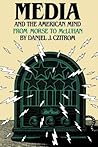
Media and the American Mind: From Morse to McLuhan Media and the American Mind: From Morse to McLuhan by Daniel Czitrom
My rating: 4 of 5 stars

Telegraph transportation


Movies represented "the most spectacular single feature of the amusement situation in recent years," a situation that included penny arcades, dance academies and dance halls, vaudeville and burlesque theaters, pool rooms, amusement parks, and even saloons. Motion pictures inhabited the physical and psychic space of the urban street life. Standing opposite these commercial amusements, in the minds of the cultural traditionalists, were municipal parks, playgrounds, libraries, museums, school recreation centers, YMCAs, and church-sponsored recreation. The competition between the two sides, noted sociologist Edward A. Ross, was nothing less than a battle between "warring sides of human nature-appetite and will, impulse and reason, inclination and ideal." The mushrooming growth of movies and other commercial amusements thus signaled a weakness and per-haps a fundamental shift in the values of American civilization.

"Why has the love of spontaneous play," wondered Reverend Richard H. Edwards, "given way so largely to the love of merely being amused?"

For those who spoke about "the moral significance of play" and preferred the literal meaning of the term recreation, the flood of commercial amusements posed a grave cultural threat. Most identified the amusement situation as inseparable from the expansion of the city and factory labor. Referring to the enormous vogue of the movies in Providence, Rhode Island before World War I, Francis R. North noted the "great alluring power in an amusement ..."


Propaganda analysis emerged as a significant new activity after the armistice. During the Great War propaganda had become a massive scientific endeavor, a sophisticated art critical to the military efforts of all the combatants. Utilizing the latest forms of modern communication, nations made propaganda a regular feature of governing-a tendency that continued after the war's end. Propaganda acquired a sinister connotation; it meant partisan appeal based on half-truths and devious manipulation of communications channels. A postwar wave of autobiographies, exposés, and popular articles helped further a belief in the deceitful power of propaganda and the ease with which modern media could be insidiously controlled in its service. The scholarly studies of propaganda generally took these fears as their starting point.

For example, Harold Lasswell's pioneer work, Propaganda Technique in the World War (1927), began by noting: "We live among more people than ever who are puzzled, uneasy, or vexed at the un-known cunning which seems to have duped and degraded them. It is often an object of vituperation, and therefore, of interest, discussion, and, finally, of study." Lasswell sought to classify the mechanisms, tactics, and strategies of propaganda, which he defined as "the control of opinion by significant symbols... by stories, rumors, reports, pictures, and other forms of social communication." Other propaganda studies in these years also directed attention to how the modern media operated and how they could be abused for propaganda purposes in various countries, particularly during wartime.


Innis
In McLuhan's view, southern culture stood as a modern manifestation of the Cinesniam deal of rational man reaching his noblest attainment in the expression of an eloquent wisdom." According to McLuhan, ever since Socrates used dialectics against the rhetoric of his sophist teachers, a continuing quarrel had raged over whether grammar and rhetoric on the one hand or dialectics on the other should prevail in organizing knowledge. The debate continued among medieval and Renaissance authorities, with the Schoolmen Insisting that one part of the trivium be the superior method in the-ology (dialectics) and the humanists insisting on the others (gram-mar, rhetoric). As the quarrel heightened in seventeenth-century England, representatives of both parties migrated to America the Schoolmen to New England and the quasi-humanist gentry to Virginia.

In America, McLuhan argued, the two radically opposed intellectual traditions developed on new soil and were geographically separated for the first time. Nourished by the agrarian estate life of the South, the Ciceronian ideal reached its flower in "the scholar states-man of encyclopedic knowledge, profound practical experience, and voluble social and public eloquence." It produced, among other things, the most creative tradition in American political thought, a tradition that stretched from Jefferson to Wilson. It advocated an agrarian society with every man as aristocrat and subordinated knowledge and action to a political good. On the other hand, the New England mind afforded a sharp contrast. Based on the Ramist application of dialectics to theological controversy, it embodied a thoroughly different tradition: "For this mind there is nothing which cannot be settled by method. It is the mind which weaves the intricacies of efficient production, 'scientific' scholarship, and business administration. It doesn't permit itself an inkling of what constitutes a social or political problem... simply because there is no method for tackling such problems." McLuhan thus reduced Ameri-can history to an internal debate within the medieval trivium. Southern literature's stress on passion versus the northern concern with character, the Civil War, and the educational debate at Chicago over the "Great Books" program all reflected the intellectual struggle of the humanist against the technological specialist. McLuhan left no doubt where his own sympathies lay. His affinity with the southern Agrarian movement of the 1920s and 1930s is striking. McLuhan, the Catholic and provincial Canadian, joined John Crowe Ransom in celebrating the South as the true inheritor of the humanist tradition...


View all my reviews

Wednesday, May 13, 2026

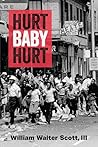
Review: Hurt, Baby, Hurt

Hurt, Baby, Hurt Hurt, Baby, Hurt by III Scott
My rating: 3 of 5 stars

I first read of this book in "How Burn, Baby, Burn Became Hurt, Baby, Hurt" by Megan Douglass in Fifth Estate #417, Winter 2025. This review of the book piqued my interest, so I obtained a copy to read. With dialect, slang, and emotion this tells of Scott's journey from tough family life to area institutions to be social club in Detroit that became a locus for the heavy-handed policing that lit a match to simmering racial tension leading to an uprising of looting, property damage and for many like Scott imprisonment and fines. Scott makes no apologies and is candid and forthcoming in telling his story.

In page vii of the forntmatter, Scott sets the tone with an epigraph:
“When you think of the long and gloomy history of man, you will find far more and far more hideous crimes have been committed in the name of obedience than in the name of rebellion.” C. P. Snow Address to the American Association for the Advancement of Science New York, December 28, 1960


Scott actually found Hawthorne Center, the state-run psychiatric hospital for children, a paradise.
This Hawthorne Center place was like another world. It wasn’t like the Page 11 → big city streets— cars, smoggy atmosphere, junkies, nasty old buildings, winos and old beat- up prostitutes standing on the corner. I mean, Hawthorne Center had clean, modern buildings like I’d never seen in my life, let alone live in one. I fell in love with the place.
...
The people were nice and loving; it was a dream come true. The one thing I learned first off here was to hate violence that I knew so well back home. It wasn’t just the violence of my father but the violence of anger being expressed by anyone towards me or anybody.


Later in life and in the chapter "Ain’t Got No Head That Belongs" he does find himself in less ideal facilities.
The administrative heads were all white and a good percentage of the counselors and teachers were white except for a few middle- class negroes here and there. So we had all these professional people who were the only unique people in the whole entire school: a nigger- making factory. Yah, a nigger factory. Every student was on their assembly belt...


More on school history relevant to this period is at riseupdetroit.org

The blind pig, once the United Community League for Civic Action, that was the flashpoint is described"
We called our joint the club instead of “United Community League for Civic Action,” which was formed as a political organization in 1964 by my father and his brother in an effort to involve Black people in the political (American they tell me) process.


Triggered by harsh policing, that night this became "Get Some Loot and Scoot"
We left the club and ran down the street toward Clairmont. There were a few people standing on the corner. I crossed the street and stopped in front of this drug store, looking around, wanting to do something. "Hey, let’s tear this motherfucker down!" I screamed to the people standing on the corner. They just sort of stood there and looked at me, not moving. I grabbed this litter basket in front of me and threw it through the window of the drug store. (I had to destroy something.) An alarm began to ring. Everybody began to run.


On reflection, an unhinged night of property crimes and police brutality is seen portentously.
...pops gave me one of his famous lectures on how he viewed the riot. “All the people have had their revolutions, and we’re the last. The Negro group is the last. It’s something that’s got to come; they can’t stop it. It’s something that every group has gone through. So now it gets down to the Negro; when his revolution comes, it won’t be no surprise to the people I know. We just happen to be the last group, that’s all.


View all my reviews

Monday, May 11, 2026

Review: Hurt, Baby, Hurt

Hurt, Baby, Hurt Hurt, Baby, Hurt by III Scott
My rating: 3 of 5 stars


View all my reviews

Review: Driven

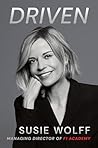
Driven Driven by Susie Wolff
My rating: 4 of 5 stars

Fifteenth
...I suddenly heard my name over the loudspeaker: Susie Stoddart to the podium ceremony. Confused, I ran to the main stage. First place, second and third trophies were handed out. Then, I was called up-Top Female Driver in the World.

My face burned with embarrassment as I stepped onto the stage in front of all those who had earned their podium places. I wasn't there to be the top female. I was there to try to win but was being singled out as different. I hadn't even registered if there were any other women in the competition; it had never dawned on me to look for them.

Motorsport had always been the one arena where men and women could compete as equals--where gender wasn't sup. posed to matter. But this award, with its separate category for me, shattered that illusion. It carved out a box I hadn't asked for, underscoring a difference I'd spent my whole karting career trying to erase. I was fighting to prove that talent mattered more than gender, I didn't want special treatment-I wanted a level playing field. I wanted to win. On the same terms as everyone else.


F1 Academy https://share.google/1Jp3qh6sjM9di5Lor

F1 Academy had to be a success.

By the time I joined, the series was already in motion, led by Bruno Michel, a highly experienced figure who had built Formula Two and Formula Three, the junior stepping stones to Formula One, into thriving championships. F1 Academy was one level lower, running Formula Four cars, the first entry point from karting, and drivers from the age of sixteen to twenty-four would be eligible.


View all my reviews

Review: Sex Money Kiss

Sex Money Kiss Sex Money Kiss by Gene Simmons
My rating: 3 of 5 stars


View all my reviews

Friday, May 8, 2026

Review: The History of Chocolate

The History of Chocolate by Sam Bilton My rating: 4 of 5 stars View all my reviews